
 Español
  English

We Presented Our Research Findings at One of the Leading International Conferences on End-of-Life Care
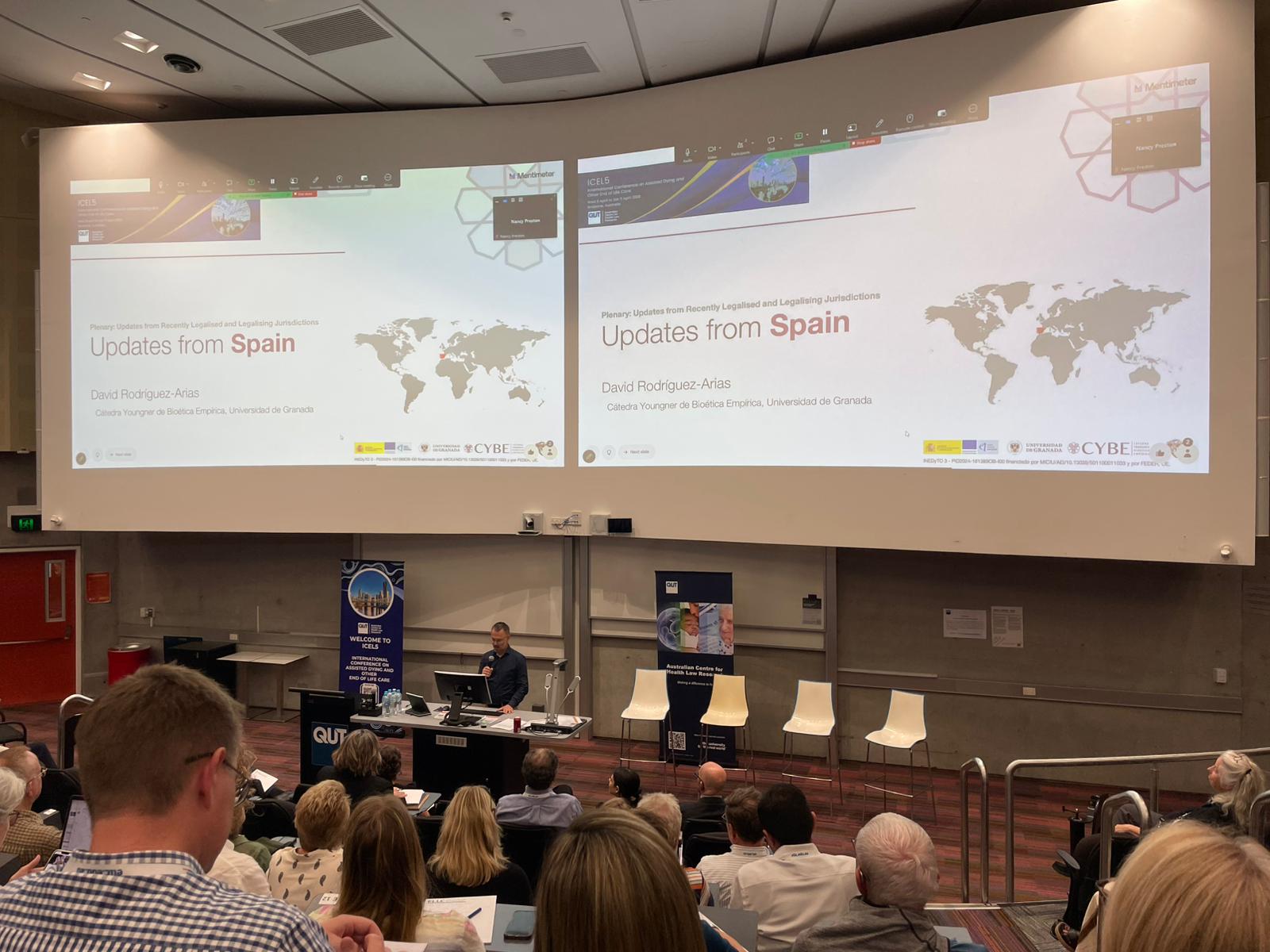
The research team of the Youngner Chair in Empirical Bioethics (CYBE) participated in the 5th International Conference on Assisted Dying and Other End-of-Life Care (ICEL5), held in Brisbane, Australia, from 8 to 11 April. Recognised as one of the leading international conferences in the field of end-of-life research, the event brought together renowned research groups from four continents and provided a key forum for interdisciplinary exchange on euthanasia, palliative care and comparative legal frameworks. In this context, the CYBE team presented the findings of several studies exploring different dimensions of end-of-life practices.
David Rodríguez-Arias, Director of CYBE, presented an experimental study examining public attitudes and knowledge regarding the distinction between palliative sedation and euthanasia. He also participated in several panel discussions on recent legislative developments in end-of-life practices, addressing topics such as organ donation following euthanasia and the particular features of Spain’s legal and clinical framework for Medical Assistance in Dying (MAiD) in comparison with other countries.
Activities within the Framework of the Ethical Monitoring and Evaluation of End-of-Life Care
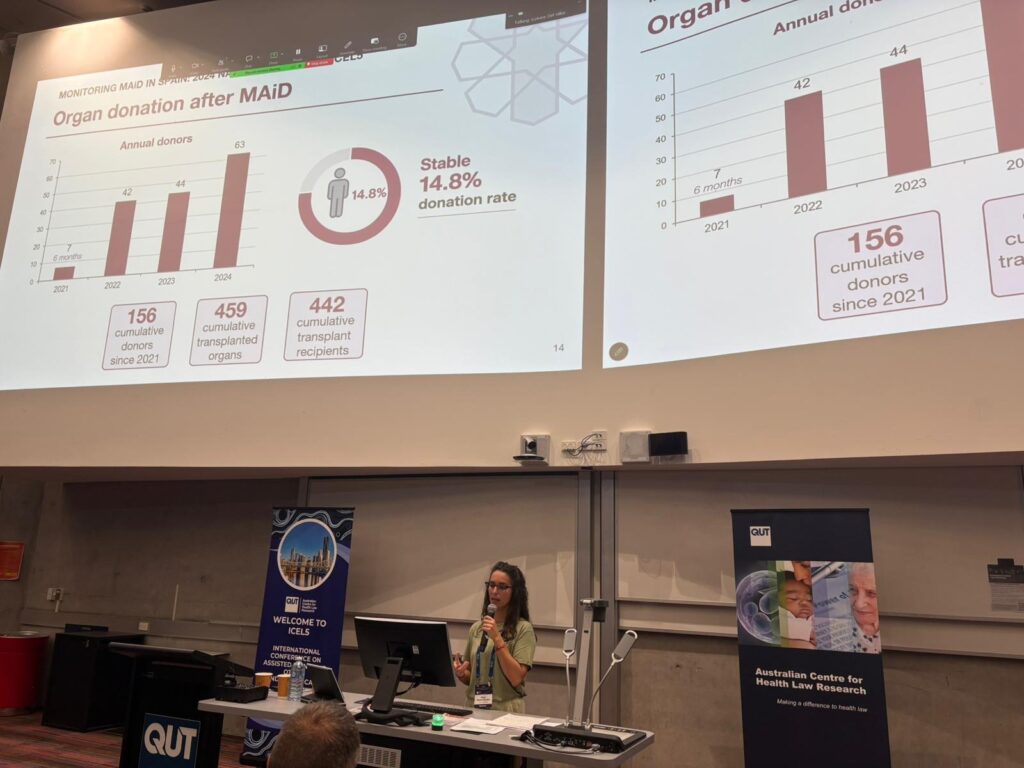
Postdoctoral researcher Nerea Molina presented the findings of the 2024 Euthanasia Report, the most recent edition to date, prepared by the Youngner Chair in Empirical Bioethics. The report provides an up-to-date overview of the implementation of Medical Assistance in Dying (MAiD) in Spain, offering key insights into its application and recent developments.
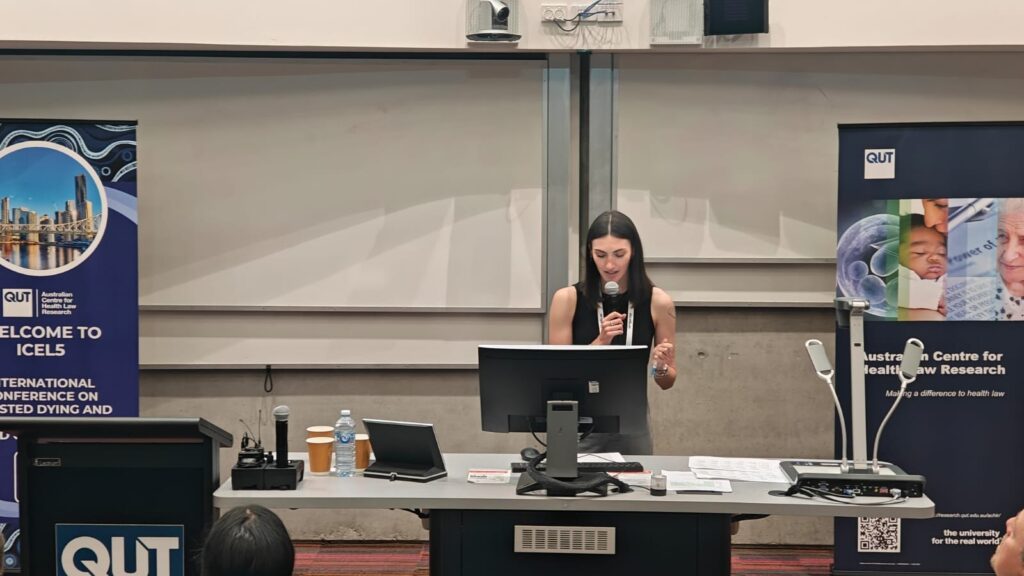
In addition, researcher María Belmonte presented an in-depth analysis of the factors influencing the approval and refusal of requests for euthanasia, examining the criteria and decision-making processes involved in these cases. Both presentations were developed within the framework of the collaboration agreement between the Youngner Chair in Empirical Bioethics and the Spanish Ministry of Health for the ethical monitoring and evaluation of end-of-life care.
One of the central objectives of this agreement is the creation of a harmonised and comparable registry across Spain’s autonomous communities covering the different end-of-life practices, a system that does not currently exist. From palliative care and advance care planning to the provision of euthanasia—regulated in Spain since 2021 under the Organic Law on the Regulation of Euthanasia—the agreement provides for the systematic collection of data and the harmonisation of regional databases. This will make it possible, for the first time, to conduct rigorous and regular interregional analyses of end-of-life practices across the country.
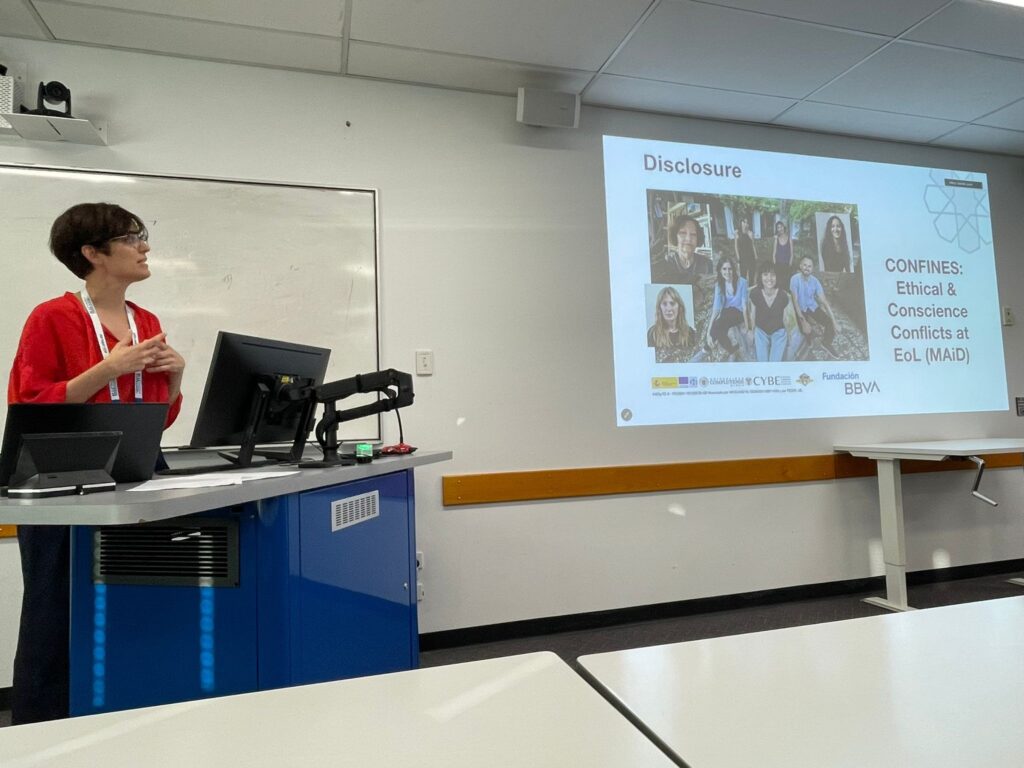
Researcher Rosana Triviño delivered two presentations. In the first, she presented the findings of the CONFINES study, which examines ethical conflicts in clinical practice and their relationship with conscientious objection. Her second presentation focused on the judicialisation of cases involving applicants for Medical Assistance in Dying (MAiD) in Spain.
Her research identified different profiles of conscientious objection and analysed how certain cases have progressed to judicial proceedings, highlighting the tensions that can arise between professional practice, the legal framework and patients’ rights.
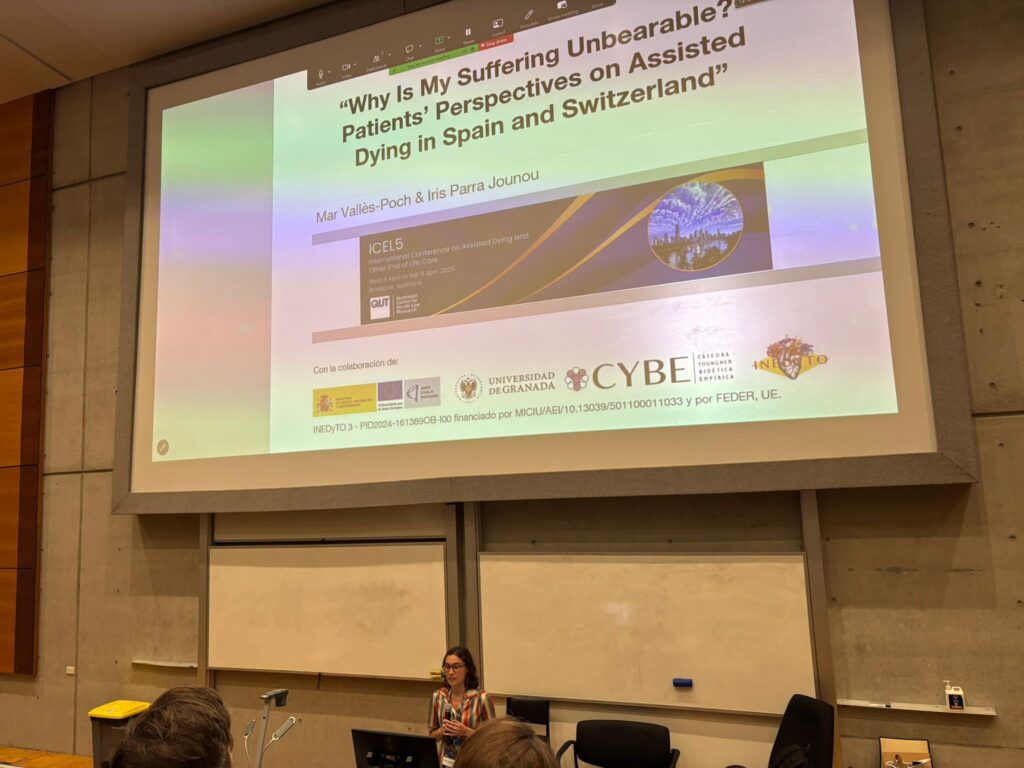
Researcher Mar Vallès contributed to ICEL5 with two presentations. The first presented the findings of the NARRATIVAS study, which explores the motivations and triggering factors that lead individuals to request Medical Assistance in Dying (MAiD). The second presentation resulted from a collaboration between the NARRATIVAS project and a study conducted in Switzerland, examining how patients requesting MAiD describe unbearable suffering, thereby providing valuable insights into the subjective experience of suffering.
Finally, Luis Espericueta and Iris Parra delivered a joint presentation exploring the relationship between global trends and local challenges in assisted dying. Their contribution focused particularly on the judicialisation of cases and the legal and ethical challenges that these processes present across different jurisdictions.
One of the main outcomes of the conference was the proposal to establish a global observatory to standardise the collection and comparison of data on assisted dying across countries. Participation in ICEL5 also enabled the CYBE research team to strengthen international collaborations by establishing connections with members of the Australasian Association for Clinical and Translational Research (ACT) and researchers from Australia. In addition, the team had the opportunity to present the upcoming Granada Conference on End-of-Life 2027, which will take place on 10–11 May 2027.