 Español
 English

PROME-SIE
Programme for Improving the Euthanasia Information System


To improve the quality, consistency and reliability of data on the provision of assistance in dying in Spain through the diagnosis, co-design and evaluation of a renewed information system: SIE 2.0.
Who are we?
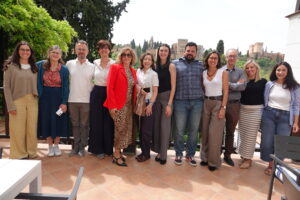
PROME-SIE is a University of Granada project, driven by the Youngner Chair of Empirical Bioethics (CYBE) and led by David Rodríguez-Arias Vailhen. It is carried out in collaboration with the Directorate General of Public Health and Health Equity of the Ministry of Health.
The team brings together expertise in bioethics, social research, clinical practice and the evaluation of public policies related to the end of life. The project plans to involve representatives of the autonomous communities, healthcare professionals, professional associations, scientific societies and citizen associations.
This initiative continues the collaboration between CYBE and the Ministry of Health in the analysis and preparation of the annual reports on the provision of assistance in dying, and forms part of the Ethical Observatory for the Monitoring and Evaluation of End-of-Life Practices in Spain.
What is our objective?
The main objective of PROME-SIE is to design and implement an improved model of the Euthanasia Information System that strengthens the quality and consistency of national data on the provision of assistance in dying.
The project aims to transform the current system into a more effective and reliable public policy tool, capable of facilitating the monitoring and evaluation of the Organic Law Regulating Euthanasia. To this end, it seeks to reduce errors, omissions and duplicates, improve the traceability of case files and harmonise recording criteria across autonomous communities.
With more accurate and comparable information, we aim to contribute to evidence-based decision-making, a better-informed public debate and greater public trust in institutions.
How do we do it?
PROME-SIE combines document analysis, case review, interviews with professionals and technical staff, and working sessions with administrations and stakeholder groups. Its methodology is organised into three phases:
-
Diagnosis, co-design and training
We will identify the limitations of the current system, define the improvements for SIE 2.0 and prepare the people responsible for using it through seminars, training materials and a practical guide to completing the forms.
-
Implementation and monitoring
The project plans to use the improved system in all autonomous communities for one calendar year, monitoring incidents, recording difficulties and improvement proposals from its users.
-
Evaluation and transfer
We will analyse the quality of the data obtained, the technical feasibility of the system and professionals’ satisfaction, and we will disseminate the results to guide future improvements.
Impact
PROME-SIE aims to improve governance, transparency and accountability in the monitoring of the provision of assistance in dying. A stronger information system will allow the Ministry of Health and the autonomous communities to evaluate its implementation more rigorously and to identify possible difficulties or inequalities.
At the professional level, the project seeks to make recording information easier through shared criteria, training and practical resources. At the scientific level, it aims to generate higher-quality evidence and facilitate the comparison of Spanish data with that of other countries.
Its expected social impact is to contribute to an informed public debate and strengthen public trust through more reliable, comparable and accessible information. The evaluation will take into account the reduction of errors and duplicates, the integrity of records, territorial consistency and user satisfaction with the system.
Funding
The project is funded by the 2025 Call for Grants to Promote a Culture of Public Innovation of the Spanish Foundation for Science and Technology (FECYT), under the category of research projects aimed at obtaining new scientific evidence to improve the design of public policy.